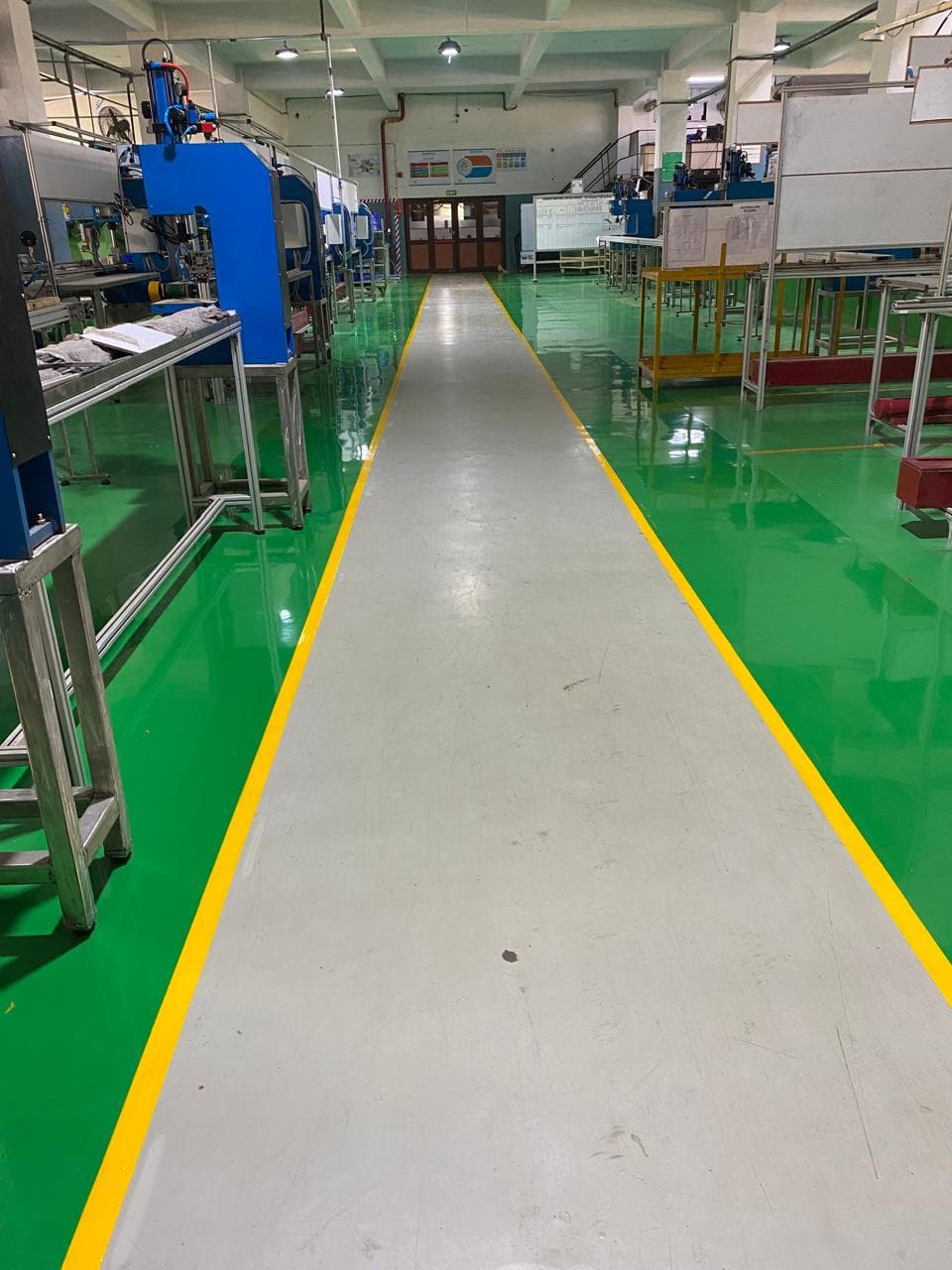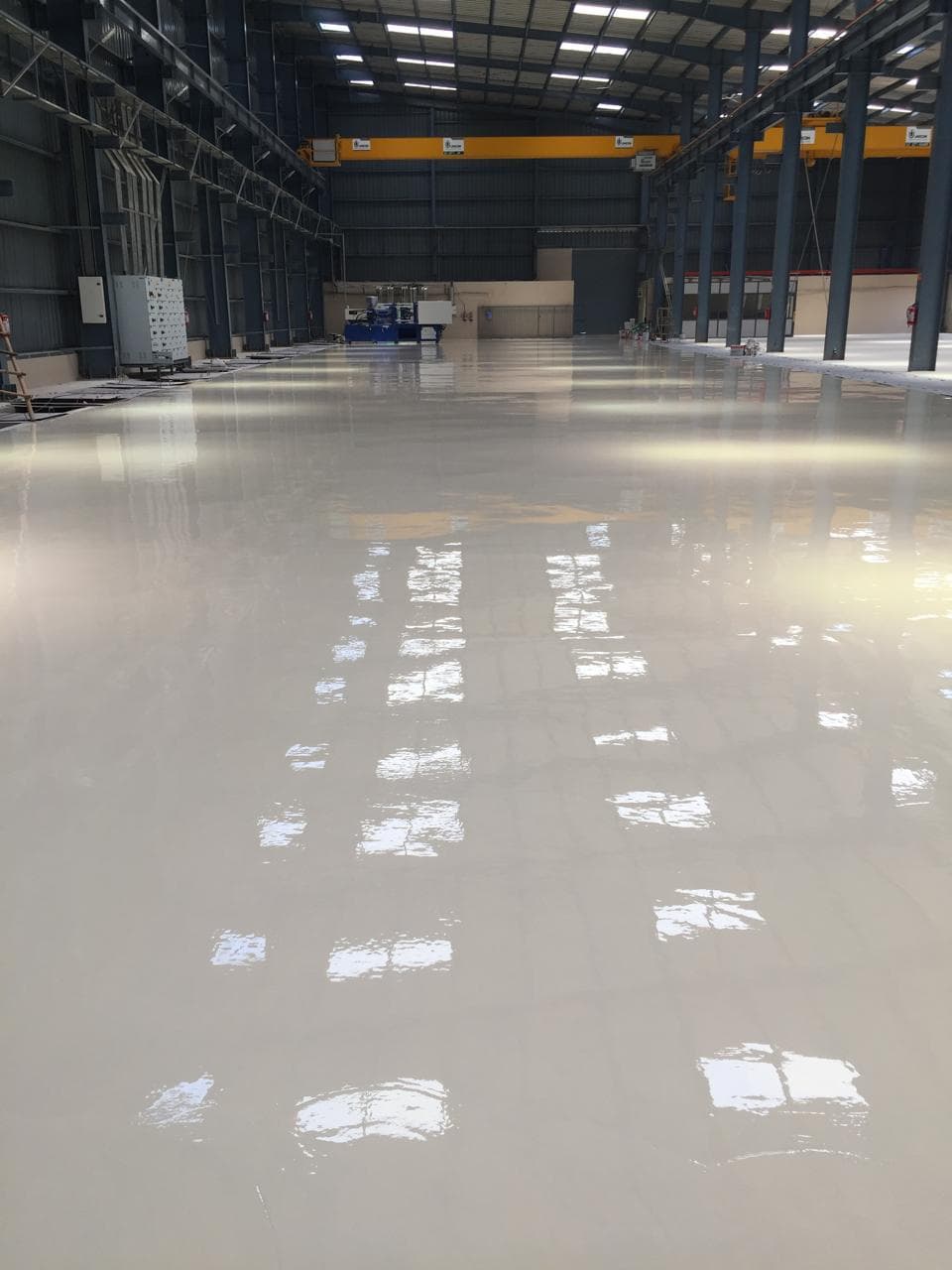
About Polyurethane (PU) Flooring & Coating
Polyurethane (PU) flooring systems are tougher and more flexible than standard epoxy. They tolerate thermal shock, hot-water and steam cleaning, a wider range of chemicals, and UV exposure — making them the right choice for food, beverage, dairy and other wet or high-temperature environments.
BJN installs PU concrete (PU cement) flooring, PU self-leveling floors and PU top coats for industrial and commercial projects across Gurugram, Manesar and Delhi NCR.
Benefits
Thermal shock resistance
Handles hot spills, steam cleaning and temperature cycling.
Hygienic
Seamless, non-porous, easy to sanitise — suitable for food and pharma areas.
Chemical resistance
Resists many acids, alkalis, fats, oils and sugars found in food processing.
Impact & abrasion resistance
Heavy-duty PU concrete withstands trolleys, impact and pallet traffic.
UV stable top coats
Aliphatic PU finishes resist yellowing in sun-exposed areas.
Systems we install
| System | Typical thickness | Best for |
|---|---|---|
| PU concrete / PU cement | 4–9 mm | Food & beverage, dairies, wet processing, cold stores |
| PU self-leveling | 2–4 mm | Pharma, clean areas, comfort and slight flexibility |
| PU coating / top coat | 100–300 microns | UV protection, matt finish over epoxy, parking decks |
Technical details
| System thickness | 100 microns (top coat) to 9 mm (PU concrete) |
|---|---|
| Finish | Matt / satin, smooth or anti-skid textured |
| Cleaning | Suitable for hot water and steam cleaning (system dependent) |
| Coving | Integral PU coving at wall-floor junction for hygiene |
Values are typical. Final specification depends on site conditions and the selected product system.
What decides the cost?
- System type and thickness
- Thermal and chemical exposure in your process
- Need for coving, drains and slopes
- Floor condition and preparation required
- Total area and working window
We give a fixed, itemised per sq ft quotation after a free site inspection.
Where it is used
Our installation process
- 01
Free site inspection
We visit, understand your process, traffic and chemicals, and check the existing floor.
- 02
Testing & recommendation
Moisture and soundness checks, then the right system and thickness — not the costliest one.
- 03
Clear quotation
Itemised per sq ft proposal with scope, timeline and warranty terms.
- 04
Surface preparation
Grinding / shot blasting, crack and joint repair, cleaning and priming.
- 05
Application
Installed by our trained team with controlled mixing and thickness checks.
- 06
Curing & handover
Protected curing, final inspection, maintenance guidance and handover.