About Industrial Epoxy Flooring
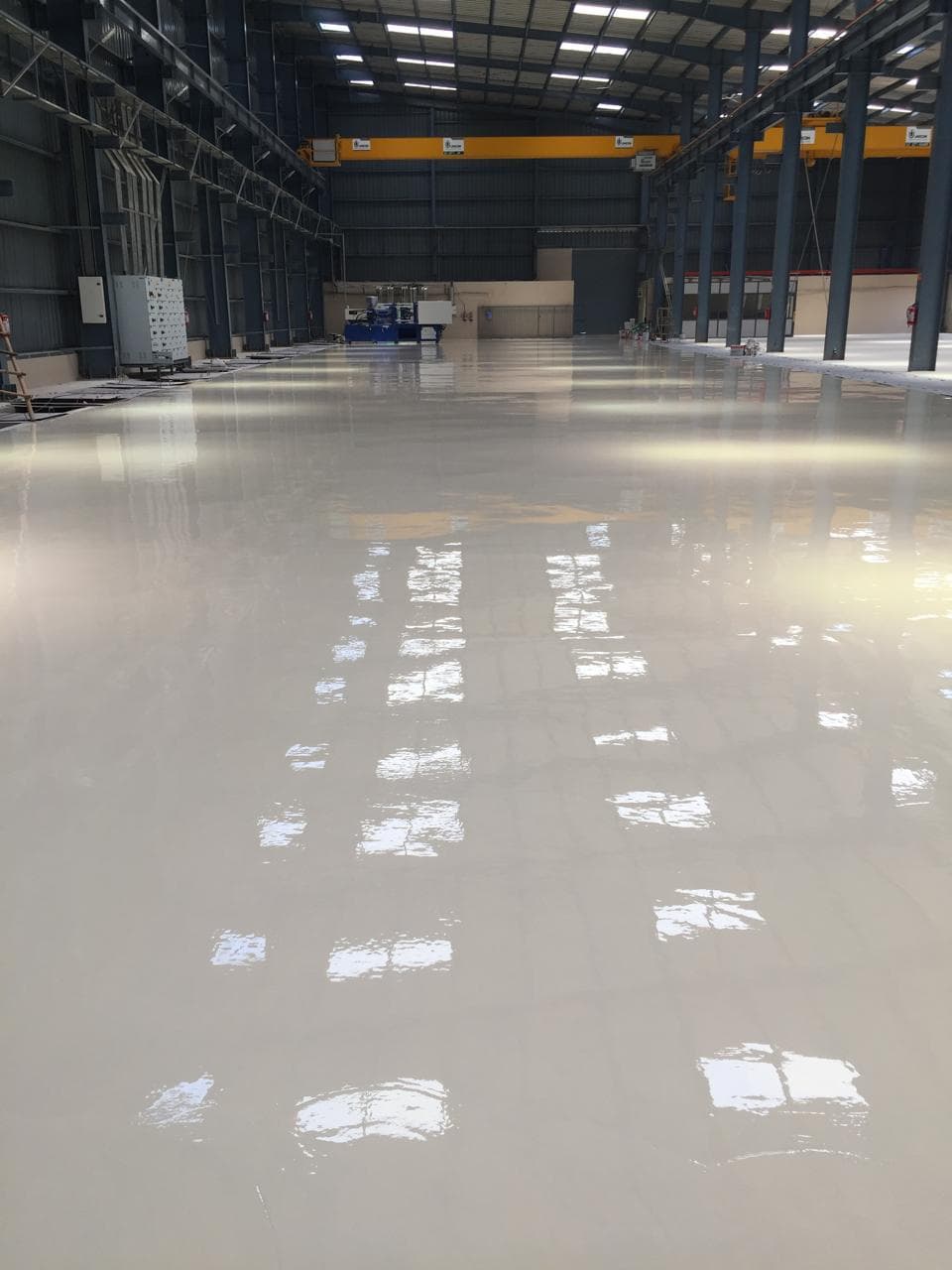
Epoxy flooring is a two-component resin system applied over properly prepared concrete. It bonds to the substrate and cures into a hard, seamless, impervious surface that stops dusting, resists oils and chemicals, and is easy to clean.
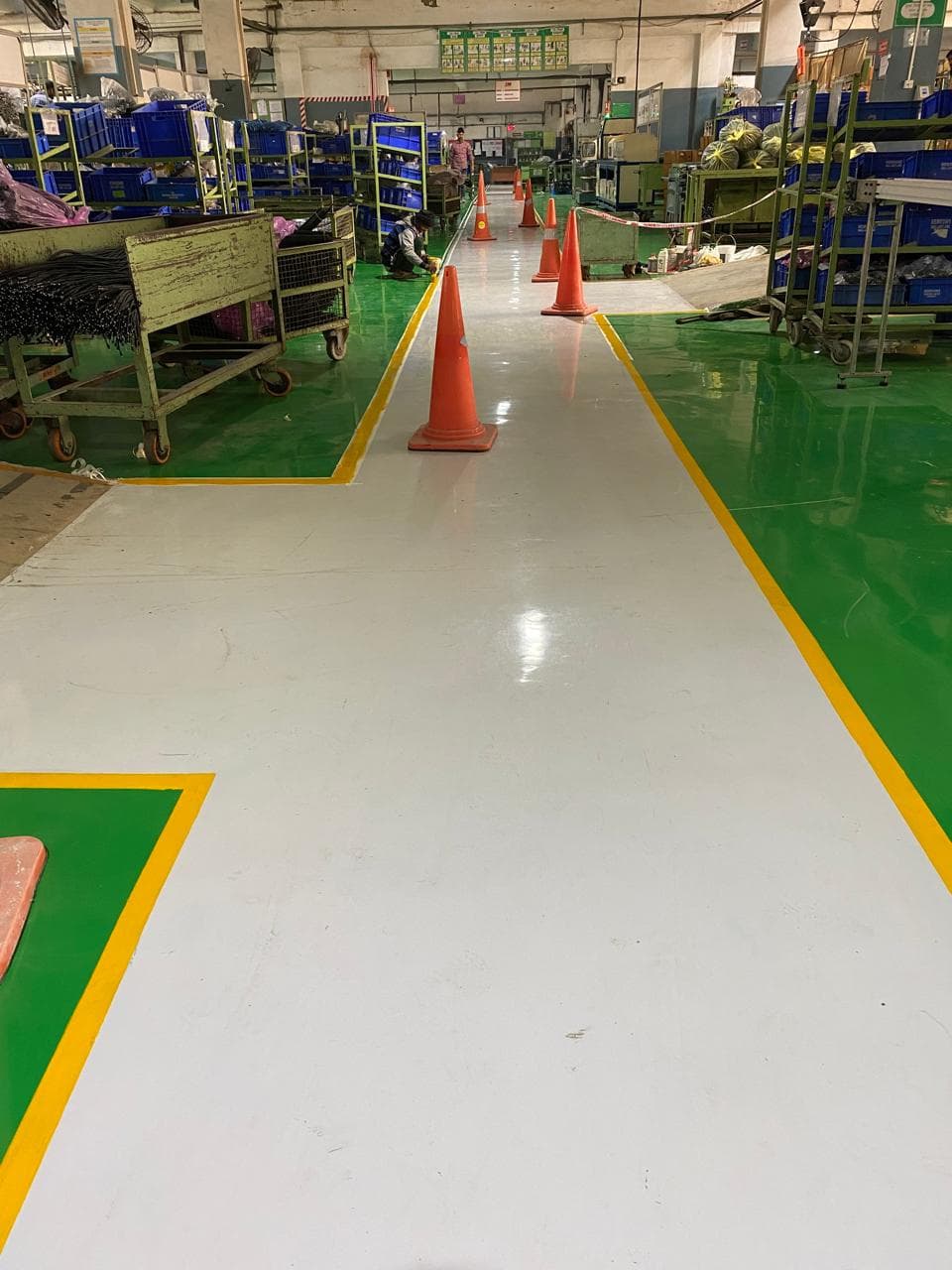
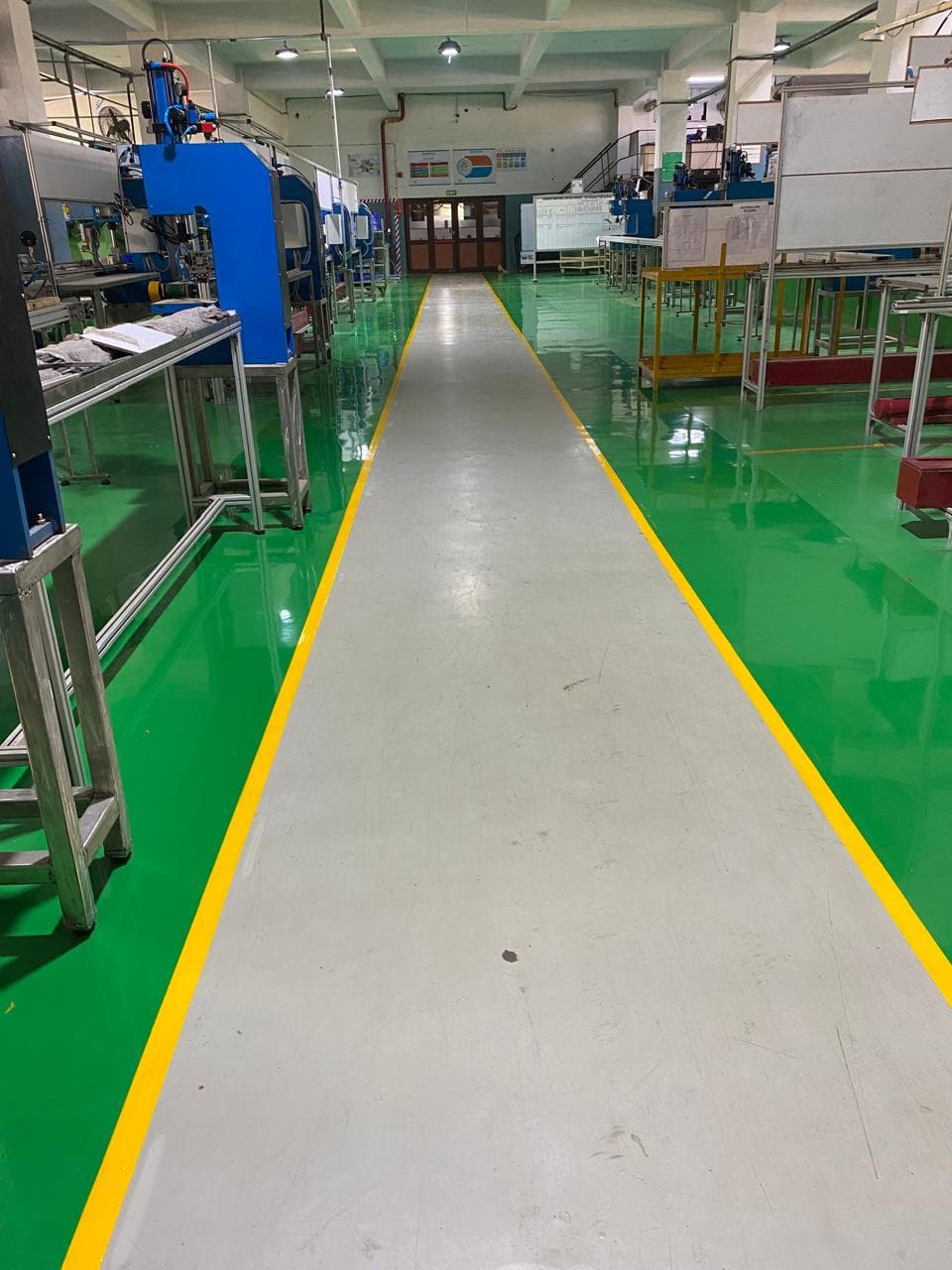
BJN Industrial Flooring Solutions designs and installs epoxy systems for manufacturing plants, warehouses, pharmaceutical units, electronics assembly, labs and commercial spaces across Gurugram, Manesar and Delhi NCR — from thin roller-applied coatings to heavy-duty self-leveling floors with line marking.
Benefits
Protects concrete
Seals the slab against abrasion, oil, water and chemical attack, extending floor life.
Dust-free & hygienic
Seamless, non-porous surface with no joints for dirt or bacteria to collect.
Easy to maintain
Regular mopping or scrubber-drier cleaning is enough — no polishing or re-sealing every year.
Brighter, safer workplace
Glossy light shades reflect light; colour-coded zones and walkways improve 5S and safety.
Customisable finish
Gloss or matt, anti-skid texture, any RAL shade, logos and safety marking.
Fast turnaround
Phased or weekend execution to minimise production downtime.
Systems we install
| System | Typical thickness | Best for |
|---|---|---|
| Epoxy roller coating (2–3 coat) | 200–500 microns | Light traffic, storage, parking, budget upgrades |
| Self-leveling epoxy | 1.5–3 mm | Assembly lines, pharma, electronics, showrooms |
| Epoxy mortar / screed | 4–6 mm | Heavy loads, trolley impact, uneven old floors |
| Anti-static / ESD epoxy | 2–3 mm | Electronics, data centres, explosive-risk areas |
| Anti-skid epoxy | 0.5–3 mm | Ramps, wet areas, loading bays |
Technical details
| System thickness | 200 microns to 6 mm (as per load & use) |
|---|---|
| Finish | High gloss / satin / matt, smooth or anti-skid |
| Colours | Standard shades + custom RAL; line & zone marking |
| Light foot traffic | Typically after 24 hours |
| Full cure / heavy traffic | Typically 5–7 days |
| Substrate requirement | Sound concrete, min. 28 days old, moisture-tested |
Values are typical. Final specification depends on site conditions and the selected product system.
What decides the cost?
- System type and thickness (coating vs self-leveling vs screed)
- Condition of the existing floor — cracks, oil contamination, old coatings
- Total area (larger areas get a better per sq ft rate)
- Colour, finish and line-marking requirements
- Working window — night, weekend or phased execution
We give a fixed, itemised per sq ft quotation after a free site inspection.
Where it is used
Our installation process
- 01
Free site inspection
We visit, understand your process, traffic and chemicals, and check the existing floor.
- 02
Testing & recommendation
Moisture and soundness checks, then the right system and thickness — not the costliest one.
- 03
Clear quotation
Itemised per sq ft proposal with scope, timeline and warranty terms.
- 04
Surface preparation
Grinding / shot blasting, crack and joint repair, cleaning and priming.
- 05
Application
Installed by our trained team with controlled mixing and thickness checks.
- 06
Curing & handover
Protected curing, final inspection, maintenance guidance and handover.